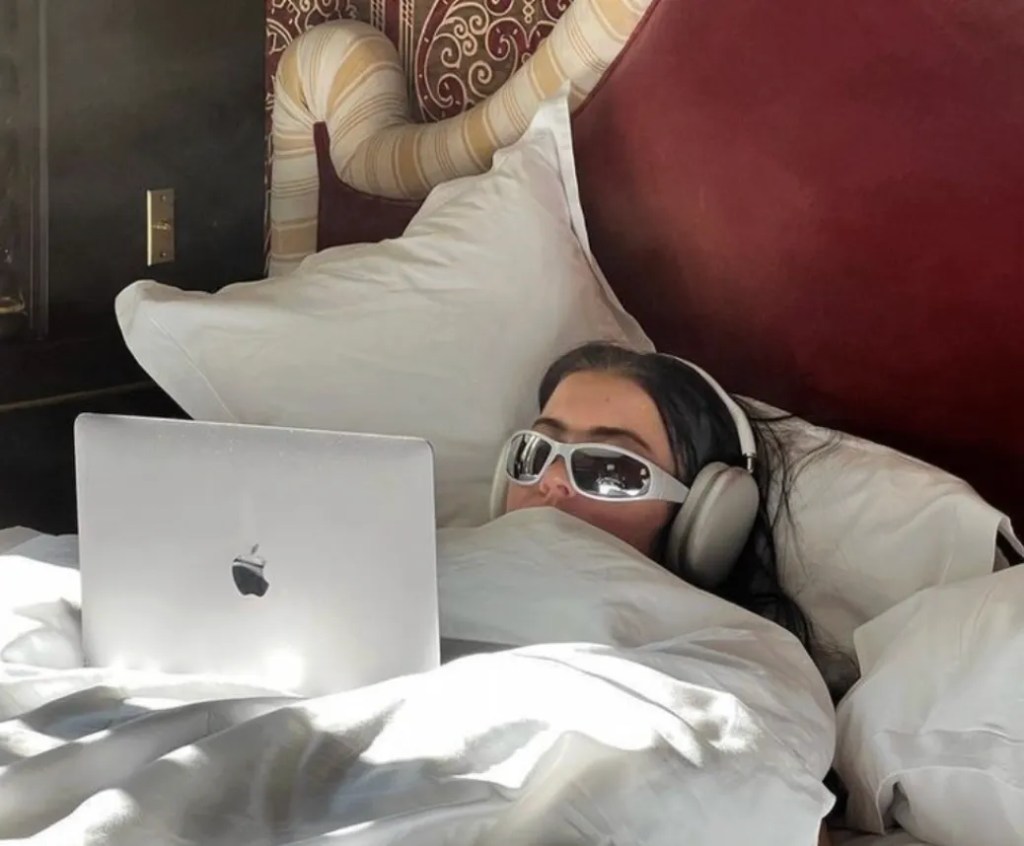
I’ve never really considered myself cool. I don’t feel like I’ve ever had any of the attributes necessary to be considered cool. I’m never really the smartest in the room. I never really have the best outfit or that cool kind of style. And I’ve never really had that naturally charismatic, smooth kind of personality that comes off as calm and effortless. Instead, I ask some dumb questions, wear mismatched socks, and stumble over my sentences like they’re made up of words I can’t pronounce. I feel like all my life I’ve been living in this perpetual state of embarrassment, and to be honest, it’s really quite the ego bruise.
But especially now, more than ever has this fact been made apparent to me, because recently I feel like there has been a rise in a certain cool kind of character trait – a societal obsession with being naturally effortless and coming across as smooth and untouchable, a trait better known as being nonchalant. And so now more than ever, I feel like the least nonchalant person to walk the earth.
Sure, one could argue that it’s mostly used as this type of “joking praise”, but I feel like it’s begun to go much deeper than that. Being nonchalant is a character trait that people strive for and are complimented and congratulated for having. It’s something that makes you cooler than others and gives you a natural appeal to the people around you.
But is being nonchalant really all fun and games? Is it actually good for our society to praise this type of unbothered attitude? Or is being nonchalant a character trait that can actually hurt human connection and create a world full of people devoid of ambition and emotion?
We’ve already established that being nonchalant can come across as an attractive personality trait that leads people to perceive you as cool and collected. But is being nonchalant really always the most attractive character trait?
Sure, an unenthusiastic friend will never come off as too clingy… because they’ll never call first. A classmate who isn’t anxious for a test might help to calm down the room… but they certainly won’t be relatable. An uninterested partner may never pester you with too many questions about yourself… but wouldn’t you want them to be curious about you? By definition, these are the main attributes of someone who is nonchalant. Someone “not displaying anxiety, interest, or enthusiasm.” So yeah, from afar this attitude can look pretty snazzy, but up close and personal, it’s kind of difficult to be around. And honestly, it’s a trait that can hinder all sorts of connections that we have or attempt to create with the people around us.
This can be mostly attributed to the fact that emotion creates connection, and nonchalantness eradicates emotion.
Whether that emotion is fear or excitement, embarrassment or anxiety, it is emotion, and if you’re feeling it, then someone else has, or is, feeling it too. And that gives humans the basic grounds and fundamental shared experiences needed to create connection.
You know that rule that we all have when texting the person we like. The “don’t-answer-too-quickly-or-it-will-look-like-you-like-them” rule. But…you do like them. So why is it cooler to look and act like you don’t? Why is pretending not to feel so deeply about a person cooler than showing them that you do care? Why is it socially more acceptable to act nonchalantly than to just hold a steady conversation with someone you like?
All of our interpersonal relationships, whether it be with a partner, a friend, or with family, require effort, require vulnerability, and require attention, which are all things nonchalantless cannot contribute to a relationship. And when we use nonchalantness as a smoke screen to hide from others the way we’re feeling or what we’re thinking, we’re hindering our ability to communicate with the people in our lives as well as minimizing our opportunities to connect with them.
And in addition to hindered relationships with others, nonchalantness can hinder the relationship we have with ourselves. Part of being a healthy, well-rounded, self-analytical, and overall happy person comes from knowing yourself. And how can you even begin to understand yourself without exploring your feelings? How can you understand the way you react to and interact with the different variables of your life if you can’t freely and fully explore your emotions?
The answer is, you can’t. Part of finding who you are is finding a way to connect with yourself. And that means being more chalant.
Don’t get me wrong. I’ve certainly had my moments where I’m feeling pretty sharp. When I’ve got my headphones in, I’m cruising down the street. Feeling nonchalant can feel pretty good at times! I like to feel cool, and I like the idea of other people thinking of me that way. But nonchalantness isn’t sustainable for the health of our relationships with ourselves or the people around us. That lack of emotional expression can hinder a conversation’s natural vibrancy and remove the personality and perspective that adds meaning and depth. And there is no way to explore your own personality in a nonchalant way.
Maybe it’s embarrassing or exposing to put yourself and your feelings out into the world. Maybe it feels like society is sticking its nose up at you and judging that chalant person that you may be afraid to be. But we are society. And if we have the power to normalize nonchalantness, then we most certainly have the power to normalize being chalant.
So be the friend who reaches out and the partner who makes an effort to show interest. Allow yourself the freedom and space to be honest about your feelings, with both yourself and the people around you. If you remove your veil of nonchalantness, you may find it just a bit easier to connect with the world, and way more fun to be alive.
And who better to take that from than the least nonchalant person on this earth?


Leave a Reply